Hidden Gaudí in Barcelona: Discover the Architect’s Best-Kept Secrets
When people think of Antoni Gaudí, iconic landmarks such as La Sagrada Família, Park Güell, and Casa Batlló immediately come to mind. While these masterpieces deserve their worldwide fame, they represent only part of Gaudí’s extraordinary legacy.
Scattered throughout Barcelona are several lesser-known works that reveal a different side of the architect: more experimental, more intimate, and always far less crowded. These hidden gems allow visitors to appreciate Gaudí’s creativity without the long lines while discovering fascinating stories behind each project.
If you’re looking for unique things to do in Barcelona beyond the usual tourist attractions, these remarkable buildings deserve a place on your itinerary.
1. Bellesguard Tower – A Medieval Castle Reimagined
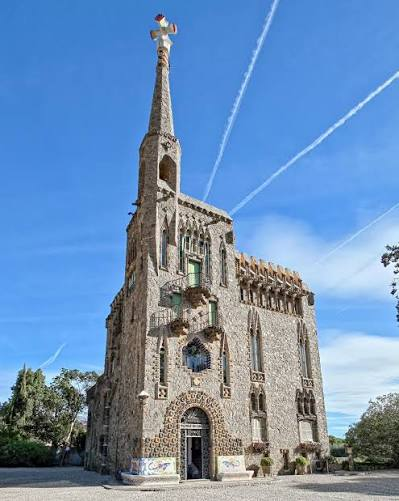
Perched on the foothills of the Collserola mountains, Bellesguard Tower is unlike any other building designed by Gaudí. Built between 1900 and 1909, it stands on the site of the former palace of King Martin I of Aragon, known as Martin the Humane, the last monarch of the House of Barcelona.
Rather than embracing his usual flowing Modernist style, Gaudí combined Gothic inspiration with his own architectural innovations, creating a building that feels both medieval and unmistakably modern.
Did you know?
- «Bellesguard» means «beautiful view,» and the property offers stunning panoramic views over Barcelona.
- The four-armed cross at the top of the tower points toward the four cardinal directions.
- Hidden throughout the building are references to Catalan history and the medieval Crown of Aragon.
- Because it attracts fewer visitors than Gaudí’s famous landmarks, it’s one of the best places to admire his architecture in peace.
2. The Teresian College – Beauty Through Simplicity
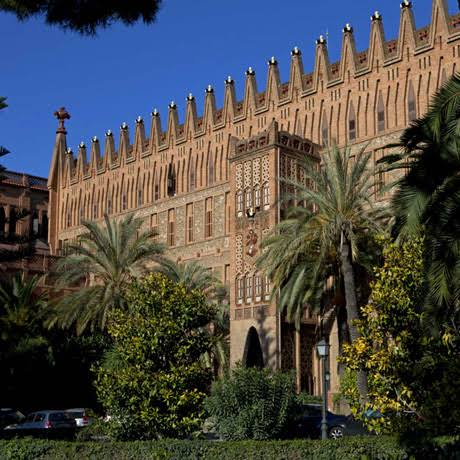
Unlike the colorful mosaics and elaborate façades that made Gaudí famous, the Teresian College demonstrates what he could accomplish with a very limited budget.
Commissioned by a religious order, the building was constructed primarily using exposed brick. Gaudí transformed these modest materials into an elegant masterpiece by playing with light, geometry, and proportion.
Did you know?
- This building contains some of Gaudí’s earliest experiments with catenary arches, which later became one of his signature structural elements.
- The long interior corridors create spectacular perspectives that photographers love.
- The school still serves its original educational purpose today, more than a century after it was built.
3. Güell Pavilions – Home of Barcelona’s Hidden Dragon
Before creating Park Güell, Gaudí designed the entrance to Eusebi Güell’s country estate.
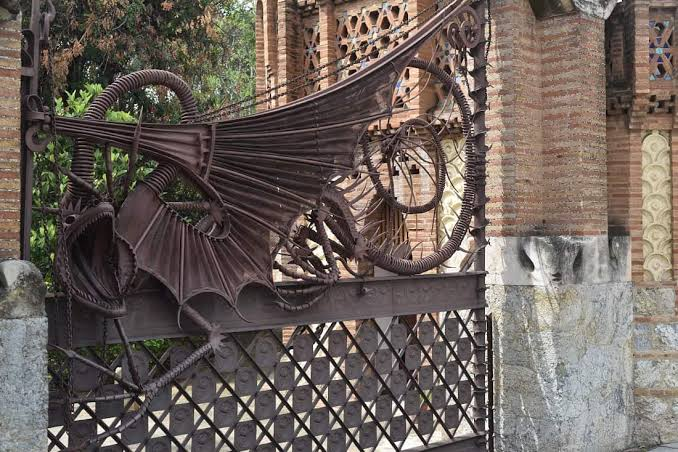
The highlight is undoubtedly the spectacular wrought-iron dragon guarding the entrance. Inspired by Greek mythology, it represents Ladon, the dragon that protected the Garden of the Hesperides.
Did you know?
- The dragon is entirely handcrafted in wrought iron.
- It has become one of Barcelona’s most overlooked masterpieces.
- Many historians consider it the artistic predecessor of the famous dragon fountain in Park Güell.
- The original Güell estate was several times larger than what survives today.
4. Miralles Gate – A Hidden Work Along an Ordinary Street
Many people walk past the Miralles Gate without realizing they’re looking at an authentic Gaudí creation.
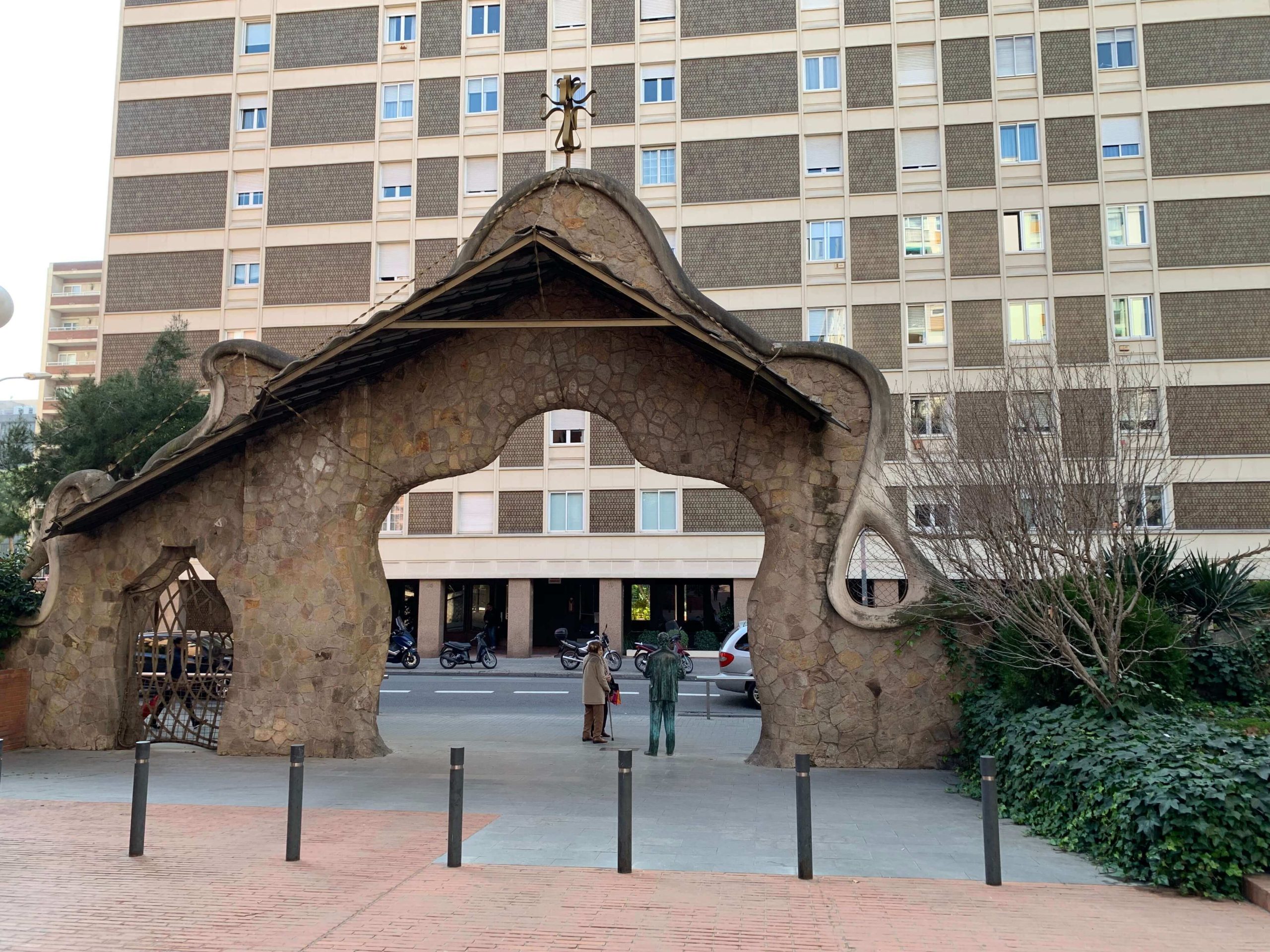
Today only part of the original wall and entrance remain, but the flowing lines already reveal Gaudí’s fascination with natural forms and organic movement.
Did you know?
- The wall resembles rolling ocean waves.
- In front of it stands a life-size sculpture of Antoni Gaudí walking, making it a popular photo opportunity.
- Even architecture enthusiasts often overlook this hidden landmark.
5. Plaça Reial Lamp Posts – Gaudí’s First Public Commission
Long before becoming Spain’s most celebrated architect, a young Gaudí received the commission to design the elegant lamp posts decorating Barcelona’s beautiful Plaça Reial.
Although relatively simple compared to his later works, they already feature symbols that would appear throughout his career.
Did you know?
- They display the winged helmet of Hermes, the Greek god of commerce.
- Two intertwined snakes represent the caduceus, another symbol associated with Hermes.
- This was the only Gaudí’s public commission.
6. Casa Calvet – Gaudí’s Most Elegant and Classical Building
Overshadowed by Casa Batlló and Casa Milà, Casa Calvet is often described as Gaudí’s most conservative design.
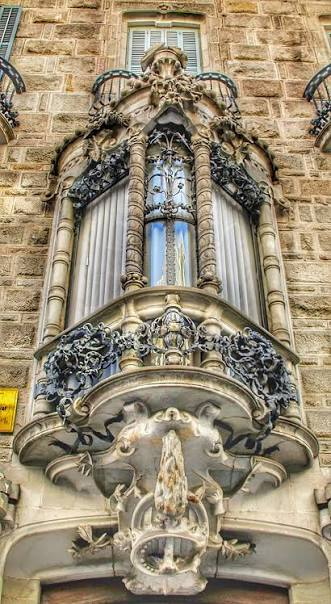
Built for a textile manufacturer, the building follows a more symmetrical composition while still incorporating imaginative details that reveal the architect’s unmistakable personality.
Did you know?
- Casa Calvet received Barcelona’s prestigious «Building of the Year» award the year 1900.
- The entrance columns resemble giant textile bobbins, honoring the owner’s profession.
- Every carved detail tells part of the family’s story.
7. Barcelona’s Forgotten Gaudí Details
Gaudí’s influence extends well beyond grand buildings.
Throughout Barcelona, attentive visitors can discover decorative details, street furniture, gates, railings, and architectural elements inspired or designed by the architect. These small works reveal his belief that beauty should be present in every aspect of daily life.
Did you know?
- Gaudí believed that architecture should include everything, from the structure itself to the smallest decorative detail.
- He frequently designed furniture, door handles, railings, and lighting fixtures specifically for each building.
- His attention to craftsmanship helped define the Catalan Art Nouveau movement.
Why Visit These Hidden Gaudí Landmarks?
Barcelona welcomes millions of visitors every year, yet most only experience Gaudí through his three or four most famous attractions.
Exploring these lesser-known buildings offers a deeper understanding of his evolution as an architect. You’ll discover how he experimented with engineering, symbolism, religion, history, and nature before creating his greatest masterpieces.
Better still, these sites are usually much quieter, allowing visitors to appreciate the extraordinary details at their own pace.
Whether you’re visiting Barcelona for the first time or returning to discover something new, these hidden Gaudí landmarks reveal a side of the city that many travelers never experience.
Frequently Asked Questions
What are the least crowded Gaudí buildings in Barcelona?
Bellesguard Tower, the Güell Pavilions, Miralles Gate, and the Teresian College are among the quietest Gaudí landmarks and rarely experience the crowds found at La Sagrada Família or Park Güell.
Which hidden Gaudí site is best for architecture lovers?
Bellesguard Tower offers one of the most unique combinations of Gothic architecture and Catalan Modernism, making it especially rewarding for architecture enthusiasts.
Are these monuments easy to visit?
Yes. Most are easily accessible by public transport, and several can be combined into a half-day itinerary exploring Barcelona beyond the typical tourist route.
Is it worth visiting these places if I’ve already seen the famous Gaudí attractions?
Absolutely. They provide a richer understanding of Gaudí’s creative evolution and reveal architectural ideas that later appeared in his world-famous masterpieces.